LinkedIn follow-up after no response: we tested ChatGPT and Claude prompts
We gave ChatGPT and Claude the same four fictional prospects and three prompts each. See where the drafts invented details, and copy the prompts that held.
We gave both chatbots the same four fictional prospects and three prompts each, from naive to constrained. The naive drafts invented details or repeated the ignored question; the constrained drafts mostly held. Raw failing and passing drafts, a scorecard and the prompts to copy.
A follow-up after silence earns its place only when it carries something new. That bar is hard enough to set for yourself; handing it to a chatbot with one vague instruction is harder. The newest agents skip the prompt box entirely and draft on their own schedule - before you hand one your inbox, read what the first week of Claude Duet reviews found. We ran the test to see where each prompt style breaks.
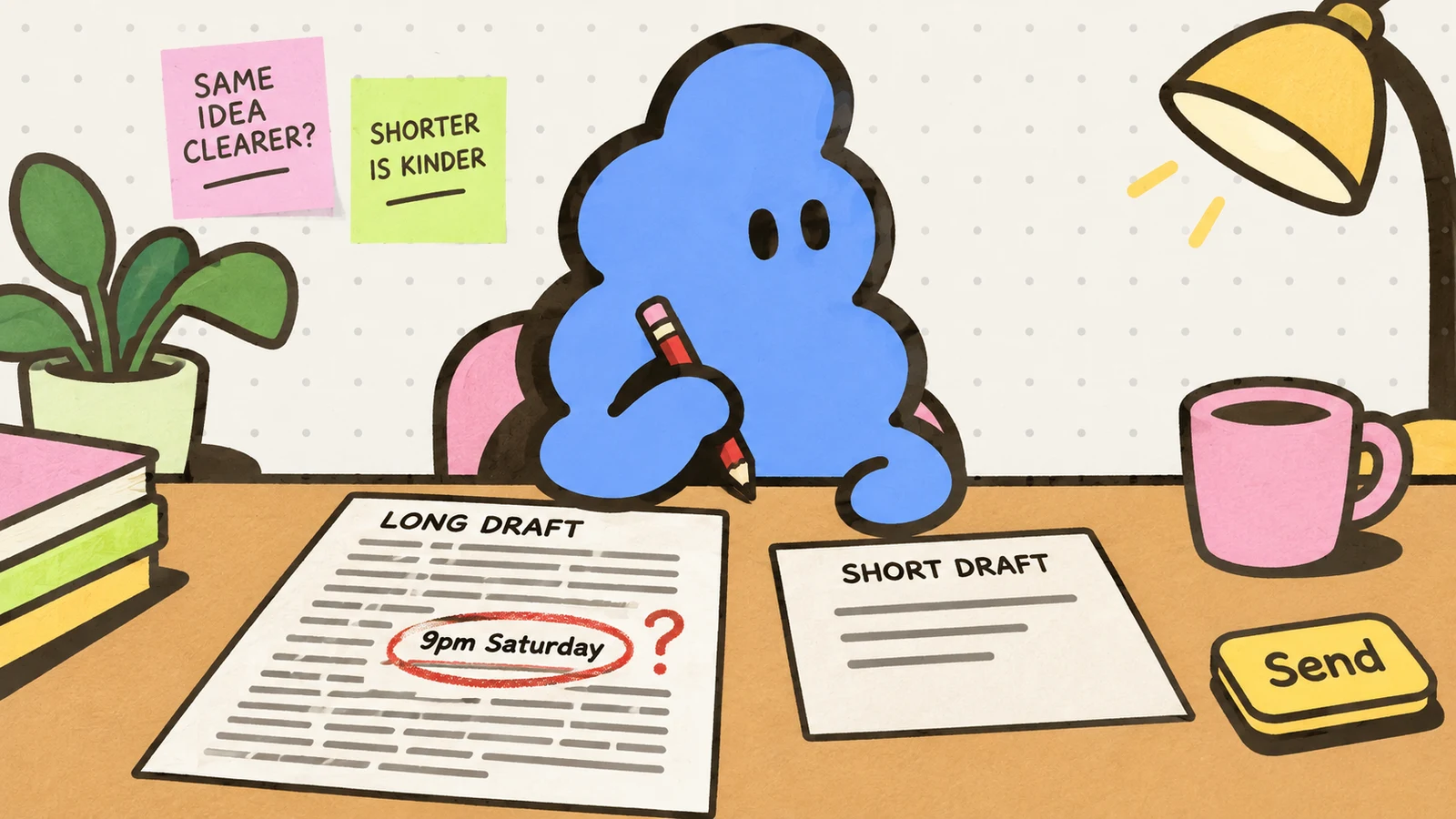
The test
In September we published three hand-written follow-up examples for this situation, plus when to stop: LinkedIn follow-up message after no response. This piece asks a different question: given only the facts a founder actually has, can ChatGPT or Claude write that follow-up without inventing a relationship?
We built four fictional scenario cards. Every person, company and thread is invented; each card is the only material the model may use. One line each:
- Dana Reeves, VP Sales at a freight broker. One DM sent 6 days ago, no reply. New fact: she posted that the company is hiring its first SDR.
- Maya Lindqvist, COO of a physiotherapy chain. She replied “interesting, not this quarter” 5 weeks ago (that reply type is its own case: How to follow up when a prospect says “not now”). New fact: a Series A funding 6 new clinics in 2027.
- Priya Nair, Head of Customer Success at a field-service SaaS. Two DMs sent, both unanswered. New fact: she commented yesterday that most churn starts with a slow first two weeks after signing.
- Tom Beckett, recruiting-firm founder and podcast host. First DM unanswered 10 days. Nothing new since.
The seller in all four is Noam, who sells a scheduling tool called Daybook. The four cards in full:
CARD 1
PROSPECT: Dana Reeves, VP Sales at Northbeam Logistics (mid-market freight broker, ~80 staff).
THREAD: Connected 3 weeks ago after Dana liked Noam's comment on a post about weekend coverage. Noam sent one DM 6 days ago asking how the inbound team assigns demo requests that arrive on weekends. No reply.
NEW FACT AVAILABLE: Dana posted last week that Northbeam is hiring its first SDR.
SELLER FACT: Daybook routes inbound demo requests to the right rep, including after-hours rules. Noam onboarded a 6-person freight sales team in June.

CARD 2
PROSPECT: Maya Lindqvist, COO at Brightclinic (chain of 11 physiotherapy clinics).
THREAD: Maya replied 5 weeks ago: "Interesting, not this quarter." Noam answered "Thanks, Maya - timing noted." Nothing since.
NEW FACT AVAILABLE: Brightclinic announced a Series A round yesterday; the announcement says the money funds opening 6 new clinics in 2027.
SELLER FACT: Daybook schedules patient intake calls and follow-ups across locations; clinics use it to cover front-desk gaps.

CARD 3
PROSPECT: Priya Nair, Head of Customer Success at Fieldstack (field-service SaaS, ~40 staff).
THREAD: Connected 2 months ago. Noam sent two DMs 3 weeks apart; both unanswered. First asked about handoffs between sales and onboarding; second shared one observation about onboarding calendars (no reply).
NEW FACT AVAILABLE: Yesterday Priya commented on mutual contact Dana Weiss's post about churn; her comment said most churn in her experience starts with a slow first two weeks after signing.
SELLER FACT: Daybook schedules onboarding kickoff calls and the first-month check-ins; one Fieldstack competitor (unnamed to prospect) uses it.

CARD 4
PROSPECT: Tom Beckett, founder of Beckett Search (12-person recruiting firm), host of "The Req Room" podcast.
THREAD: Tom accepted Noam's connection request 2 weeks ago; the note mentioned episode 40 of his podcast, about candidate ghosting. Noam's first DM (10 days ago) asked how his coordinators currently schedule candidate screens. No reply.
NEW FACT AVAILABLE: None. Nothing new from Tom since.
SELLER FACT: Daybook schedules candidate screens and interviewer reminders; recruiting teams use it for no-show reduction.
``` Three prompts per card, on both models, fresh chat each time, free tiers, first output kept with no regenerations. Ran on October 19, 2026: ChatGPT free without sign-in, and Claude free ("Sonnet 5.5 Medium").

## The naive prompt

```text
Write a LinkedIn follow-up message to this prospect.

[one of the four cards above, pasted in full]
The failures are the useful part. Ten naive drafts in all: four from ChatGPT, six from Claude, which offered two versions on cards 1 and 2. Six of the ten failed at least one check: ChatGPT’s card 4, and Claude’s card 1 version A, both card 2 versions, card 3 and card 4. The failure modes came in four kinds.
Invented specifics. Claude, card 1, verbatim:
Hi Dana, saw you're hiring Northbeam's first SDR. Congrats, that's a big step for a team your size.

My last note was about weekend demo requests, and the SDR hire makes it more relevant: once someone owns first touch, it helps to have clear rules for who gets a lead and what happens when it lands at 9pm Saturday. In June I helped a 6-person freight sales team set that up in Daybook so inbound requests reach the right rep, after-hours included.

Happy to share how they structured it if useful. No pitch needed, and no worries if the timing's off.
Claim by claim: the SDR hire is on the card. “9pm Saturday” is not; the card says weekend coverage with no times, and the invented detail is exactly the kind a prospect can falsify at a glance. The June onboarding is on the card. “How they structured it” implies customer knowledge the card does not supply.
Invented familiarity, plus naming the silence. Claude, card 3, wrote that Priya’s point “matches what I keep hearing”, though the card gives Noam no such running expertise, and added “No pressure, since my earlier notes went quiet”, which points at the unanswered messages. Both drafts fail the same way a bad human follow-up does: they decorate instead of adding.
Email drift. Claude’s fuller card-2 version ran to 650 characters, and both card-2 versions signed off with “Noam”. A letter, not a DM.
Re-asking the ignored question. ChatGPT, card 4, verbatim:
Hey Tom — circling back on my earlier note. Given your episode on candidate ghosting, curious if coordinator time spent scheduling screens and chasing confirmations is still a headache at Beckett Search. Daybook helps recruiting teams automate scheduling and interviewer reminders to cut down on no-shows. Worth a quick chat to see if it could help your team?The card says nothing new has happened since the first DM, and the first DM already asked how Tom’s coordinators schedule screens. With nothing new to say, the model rephrases the unanswered question and adds “still”. That is the bump our September guide tells you not to send.
ChatGPT’s other three naive drafts stayed factual and passed. The naive failure mode differs by model: Claude decorates, ChatGPT repeats.
The structured prompt
Here are the facts I have about a prospect and my product. Use only these facts.

PROSPECT: [name, role, company, one line]
THREAD: [what has happened so far, in plain facts]
NEW FACT AVAILABLE: [one thing, or "none"]
SELLER FACT: [what your product does, one sentence]

Write the follow-up DM under these constraints: under 300 characters; use only the facts above - no invented facts, names, or familiarity; the message must add one piece of new information or a new reason from those facts, not a reminder; no guilt trips and no 'just bumping this'; at most one small question; I will read it and click send myself.
All eight structured drafts passed our checks. ChatGPT, card 1, verbatim:
Saw Northbeam is hiring its first SDR—timing felt relevant. I onboarded a 6-person freight sales team in June using Daybook to route inbound demos, including after-hours rules. How are you thinking about routing as the team grows?Claim by claim: SDR hire, June onboarding, after-hours routing are all on the card; nothing else is asserted; the question is small and answerable; about 230 characters.
Claude, card 3, verbatim:
Hi Priya, your comment on Dana's churn post caught my eye: churn starting with a slow first two weeks. Daybook schedules the kickoff calls and first-month check-ins in that window. Who owns that stretch at Fieldstack?Claim by claim: her comment and the Daybook facts are on the card (the Dana named is Dana Weiss, the mutual contact on card 3, not card 1’s prospect); the draft deliberately leaves out the unnamed-competitor fact; about 220 characters; one small question.
One observation worth keeping: Claude’s structured runs came with self-checks around the draft. On card 1 it warned that “‘routing was a big part of it’ is a light inference from the Daybook routing fact, so cut it if you’d rather not claim that.” Useful, but the checks live in the surrounding notes, not in the draft. The draft is the part that gets pasted, so the constraints still do the real work.
Closing the loop
The third prompt asks for the final message that closes the loop politely, same constraints, nothing asked. ChatGPT passed all four cards. Claude passed two and failed two, both times on pressure language: “I’ll leave it here so I don’t crowd your inbox” and “I’ll stop cluttering your inbox”. Those are the closing version of a guilt trip; they make the prospect responsible for the sender’s message count. One failed draft also kept the “Noam” sign-off.
A passing closer, Claude, card 2, verbatim:
Hi Maya, congratulations on the Series A and the plan to open 6 new clinics in 2027. You said not this quarter, so I'll leave it there. If covering front-desk gaps across locations ever comes up as you grow, Daybook is here. Wishing you a smooth rollout.It acknowledges her words, adds nothing invented, asks for nothing, and ends the thread in about 255 characters.
Real send data points the same direction. In a first-party teardown published October 19, one vendor analyzed 27,737 of its own outreach conversations from the past year: follow-ups raised the reply total from 26.5% to 38.4%, but the share of first replies that were negative climbed from under 1% at the intro message to about 15% by the third follow-up. Every extra touch won fewer replies and spent more goodwill, which is why the tested final prompt closes the loop instead of extending the thread. Two caveats before you read too much into it: the numbers are one company’s account, not a benchmark, and the vendor runs multi-account automation, which sits against LinkedIn’s rules. The trend line is still worth knowing.
The prompt:
Here are the facts I have about a prospect and my product. Use only these facts.

[same card as above]

Write the final follow-up that closes the loop politely under these constraints: under 300 characters; use only the facts above - no invented facts or familiarity; no guilt, no 'I've tried reaching you', no invented deadline; leave the door open without asking for anything; at most one small question if it earns its place; I will read it and click send myself.
The scorecard
Six checks per draft: no invented facts or familiarity (an automatic fail); adds new information or a new reason; no guilt-trip language; specific rather than generic; shaped like a DM; small answerable ask. Where Claude returned two versions, each is scored.
The results, by model and prompt:
- ChatGPT, naive prompt: pass on cards 1, 2 and 3; card 4 fails (repeats the ignored question).
- ChatGPT, structured prompt: pass on all four cards.
- ChatGPT, close-the-loop prompt: pass on all four cards.
- Claude, naive prompt: card 1 fails on version A (“9pm Saturday”) and passes version B; card 2 fails on both versions (email length, sign-off); card 3 fails (invented familiarity, names the silence); card 4 fails (adds “candidate reminders”).
- Claude, structured prompt: pass on all four cards.
- Claude, close-the-loop prompt: card 1 fails (“crowd your inbox”, sign-off); cards 2 and 3 pass; card 4 fails (“cluttering your inbox”).
Claude’s card-4 naive failure is worth a footnote: the card says Daybook sends interviewer reminders, the draft wrote “interviewer and candidate reminders”, and Claude’s own notes said to cut “and candidate” if inaccurate. The model caught its own invention and still shipped it in the draft.
What to copy
Two working habits fell out of the test. First, the card matters more than the wording of the instruction: every failure traced to the model filling gaps the card left open, so write the card before touching the prompt, and if NEW FACT AVAILABLE is “none”, use the close-the-loop prompt or send nothing. Second, keep the constraints in the prompt every time; the naive drafts show what the models do without them.
Dollar Outreach is built on the same division of labor: you paste the prospect’s profile URLs, you read every draft, and you send each message yourself.
Limits
- One person’s judgment on the outputs. The prospects are fictional, nothing was sent, and no reply rates were measured.
- Free tiers, one run per combination, checked October 19, 2026. Models change; treat this as a dated check, not a standing verdict.
- The model writes a draft. Whether there is a real reason to follow up at all stays with the founder, and so does the send button. When to stop instead: LinkedIn follow-up message after no response.